Diving in Palau: Two-Spot Red Snapper Mass Aggregation
An honest account of our dive during the red snapper mass spawning event in December 2025.
2/25/20264 min read
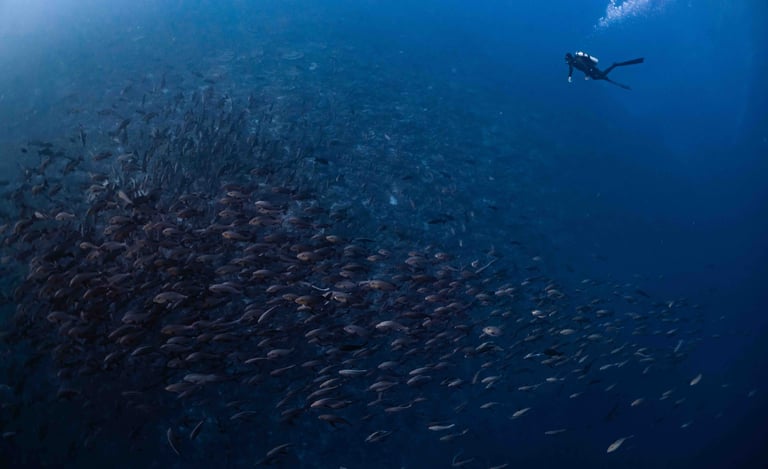
what we came for
When we first dived in Palau in December 2023, we vowed to return. This place held a magic we had never found anywhere else. We fell in love with the diverse underwater landscapes, the crystal-clear visibility, and the sheer abundance of wildlife. Every dive promised excitement and discovery. There was never a dull moment. The most unforgettable experience was witnessing the bumphead parrotfish mass spawning event (read about it here).
Two years later, we found ourselves back again. This time, we came for another phenomenon Palau is famous for, the two-spot red snapper mass spawning, which takes place for a few days around the full moon each month. We also wanted to revisit the dive sites that had made our previous trip so memorable.
Photo by Brittany illardi
preparing for the dive
A few days before the full moon, our guide Peter suggested a familiarisation dive at Shark City, where the spawning occurs. It was a necessary step. The site can have strong currents, and we needed to understand the terrain before the main event.
Shark City is a broad outer reef slope that slants gently into open blue water, exposed to steady current. There are no dramatic walls or pinnacles, just a clean, sloping reef edge. Even then, we saw red snappers scattered around the site. It felt like the hours before a major concert or sporting event. Early arrivals were already gathering, and anticipation was quietly building.
Then the long-awaited day arrived. We woke before dawn and set off while it was still dark. By the time we reached Shark City, the sun had risen beneath a blanket of grey cloud. The dim conditions would make filming a challenge. As we geared up, there was a sense of déjà vu. Just like the bumphead event, dozens of dive boats were already there, with more arriving. We braced ourselves for chaos.
After a firm briefing about the rules of the dive (keep your distance, stay with the group, monitor your air and depth) it was time to drop in.
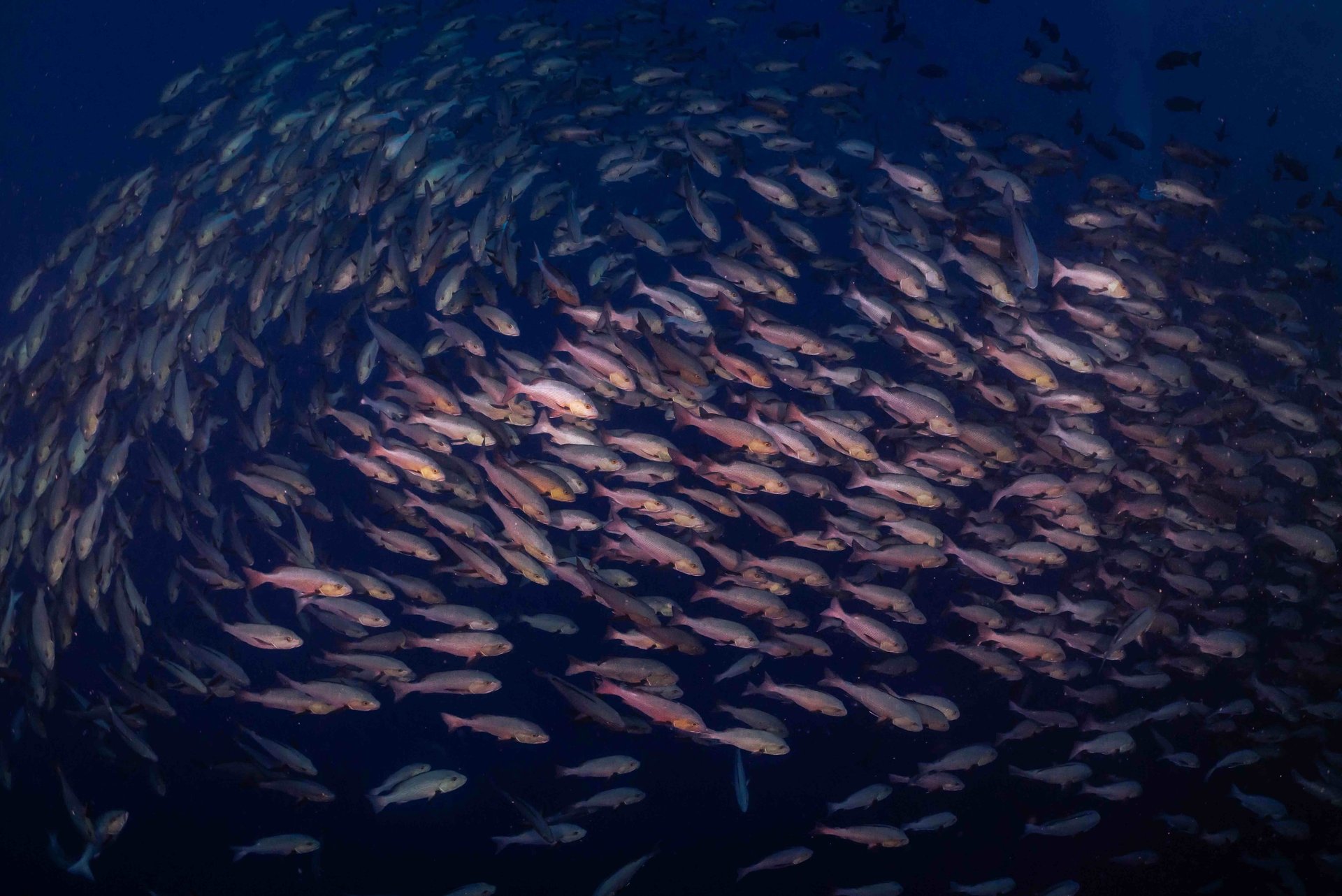
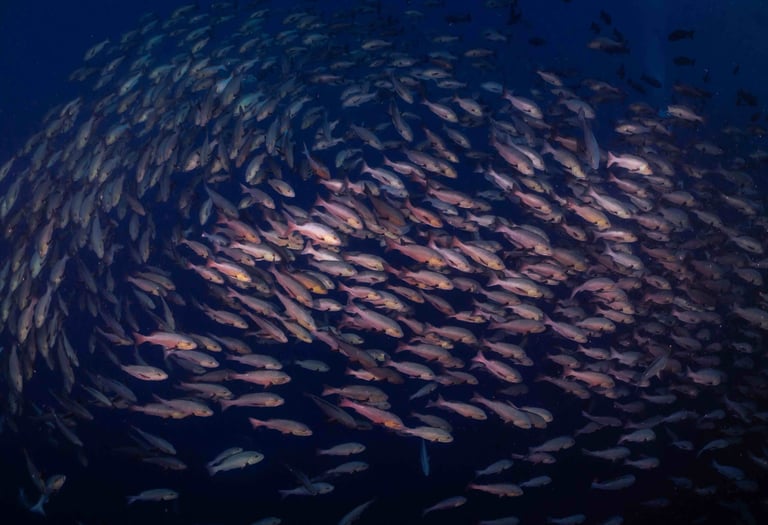
Photo by Brittany illardi
the dive
The moment we entered the water, it was pure adrenaline. Almost immediately, we saw a swirling vortex of red snappers and dozens of divers scattered around it. Our guides moved us closer, but another large group approached at the same time. Rather than crowd the fish, our guides pulled us away, confident we would find another aggregation.
We did.
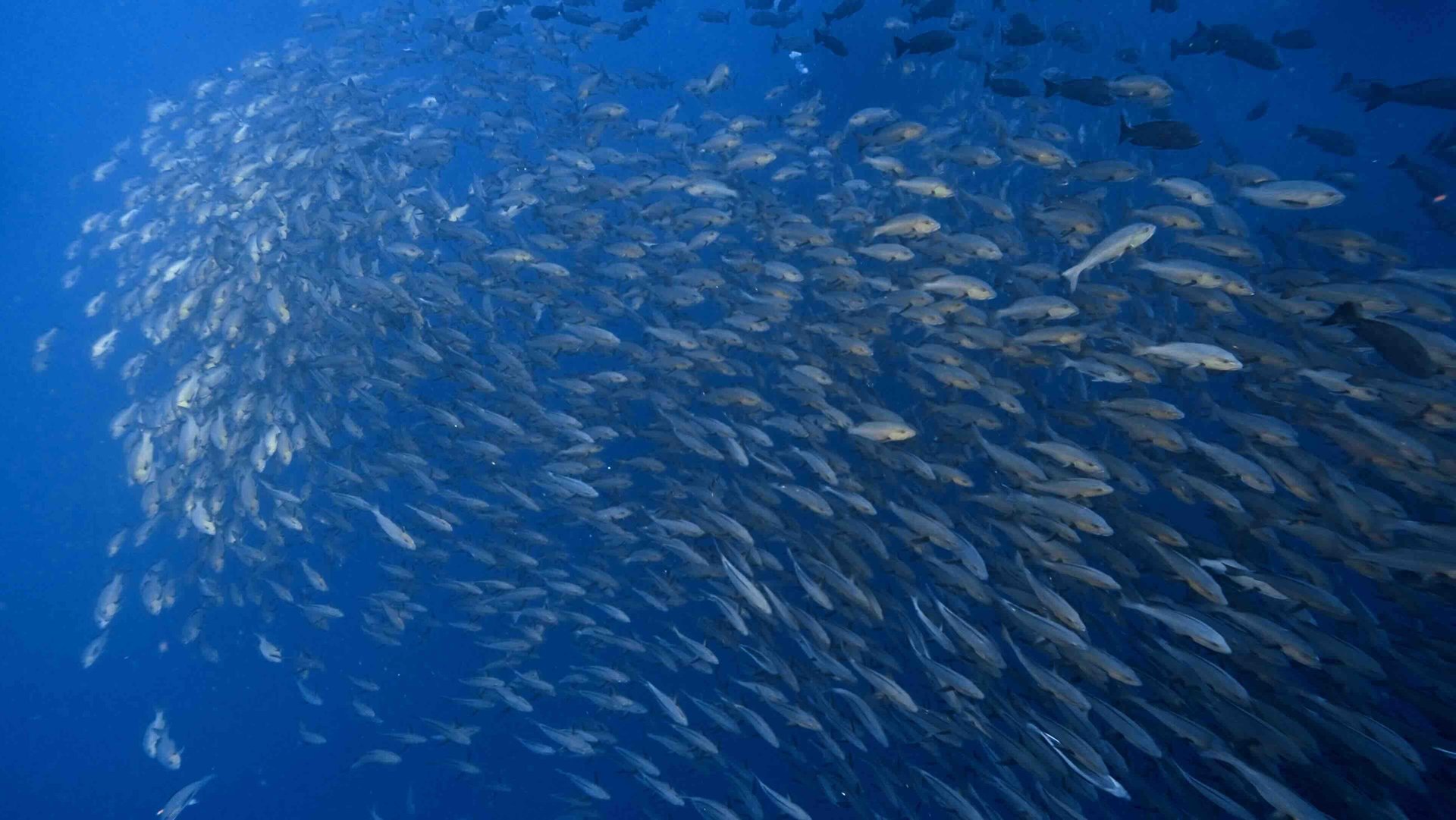
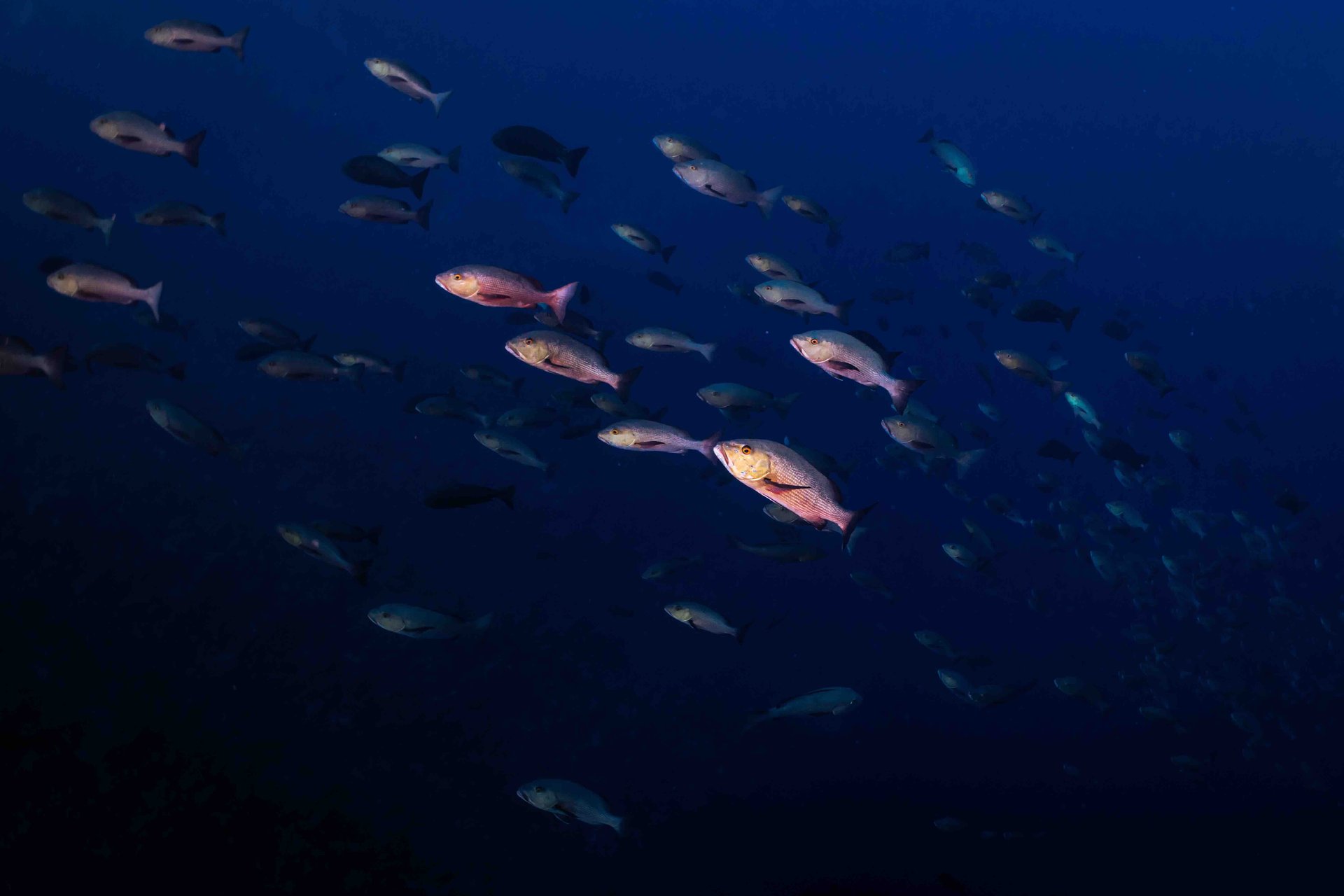
Another vortex materialised ahead of us. Thousands of fish were packed tightly and moving as one. Some were pale and silvery, others glowed deep ruby red. We approached slowly, careful not to spook them while managing ourselves in the current. With the reef forming a broad plateau, there was nowhere to shelter. Thankfully, the current was manageable.
Then, without warning, the vortex bulged and scattered.
An unruly diver from another group had plunged straight into its centre, wielding a long selfie stick and finning frantically against the current. Somewhere within our group came a strangled, muffled cry of disbelief. Our guide gestured angrily toward the offender’s group, trying to catch their guide’s attention.
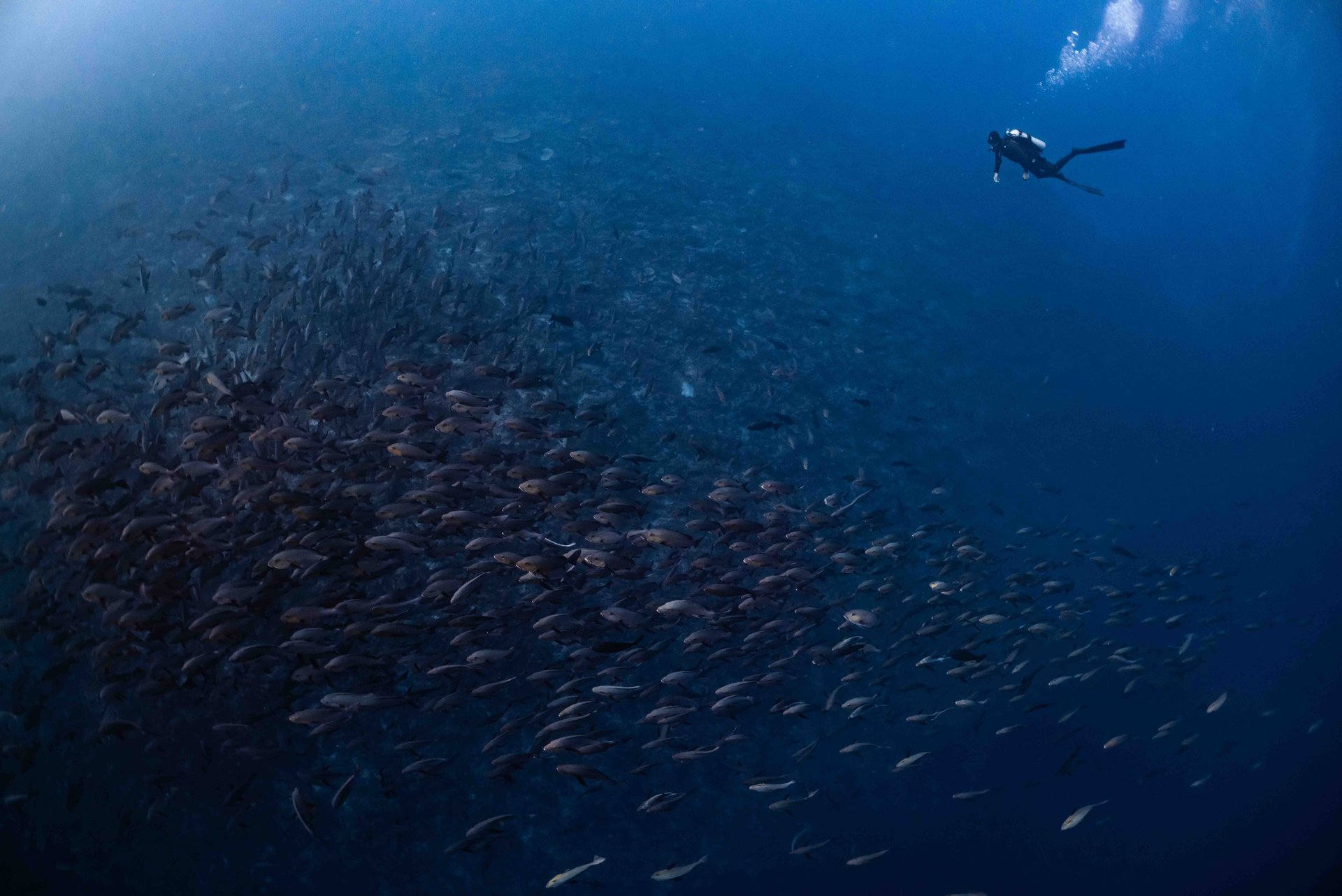
With the vortex dispersed, we continued toward the reef edge. There, clusters of red snappers were spawning. In sudden bursts, small groups surged upward into the blue, releasing eggs and sperm in smoky clouds before dropping back to repeat the ritual. All around us, these bursts erupted in every direction. Below, at 25 to 30 metres, a massive streaming school shifted unpredictably across the slope. At times, stationary divers found themselves directly in its path with no time to move. The school, thankfully, seemed unbothered.
Yet throughout the dive, we repeatedly saw the same diver charging into clusters and schools of red snappers, determined to film the spectacle at any cost. His brightly coloured gear made him easy to recognise. He was not the only one. Several others displayed the same disregard for basic dive etiquette.
Then our guides pointed deeper. Three bull sharks were circling below. We had been told that predators learned that where there is mass aggregation, there are easy meals. Exhausted from spawning, the snappers were vulnerable.
After forty minutes, we surfaced. The spawning frenzy was still underway, but the number of divers had become alarming. We ended the dive feeling both privileged to witness something extraordinary and unsettled by how humans behaved in its presence.
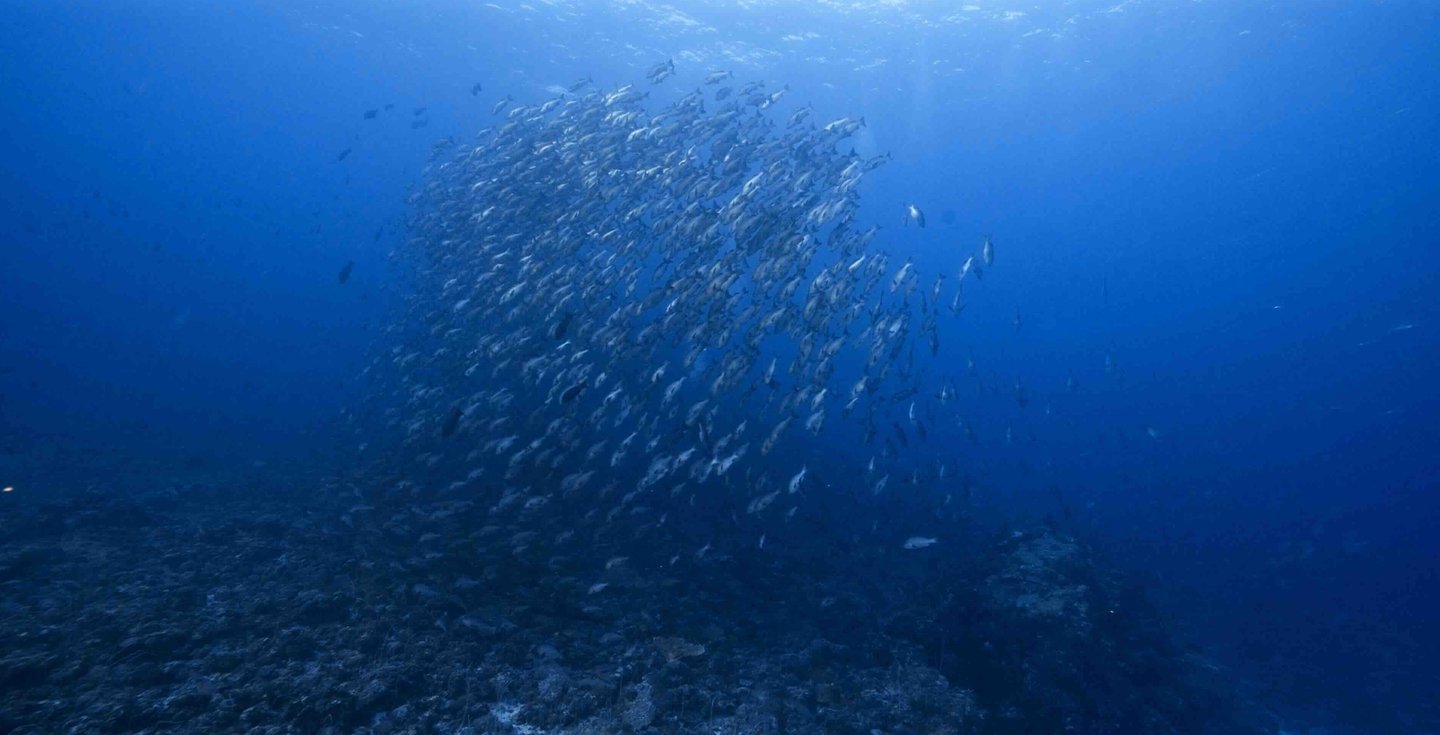
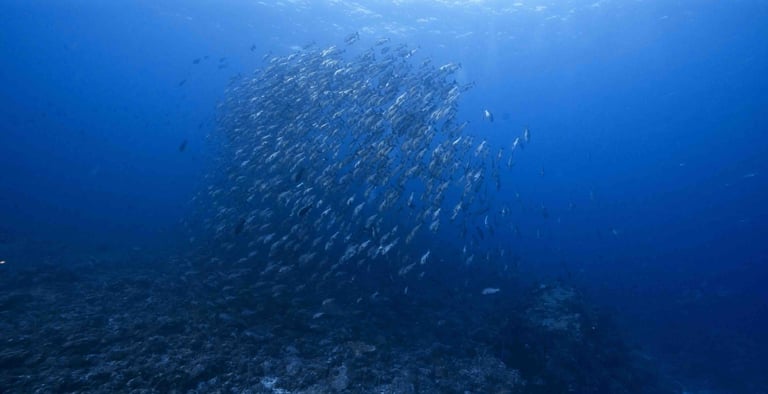
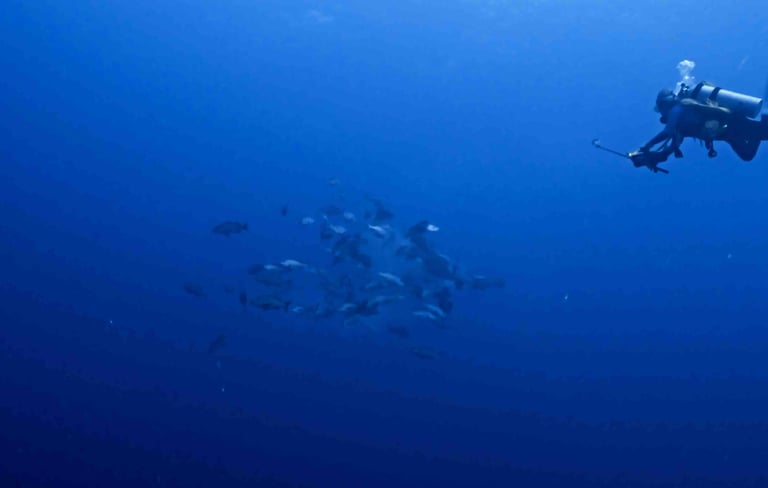
The beautiful vortex before the disturbance.
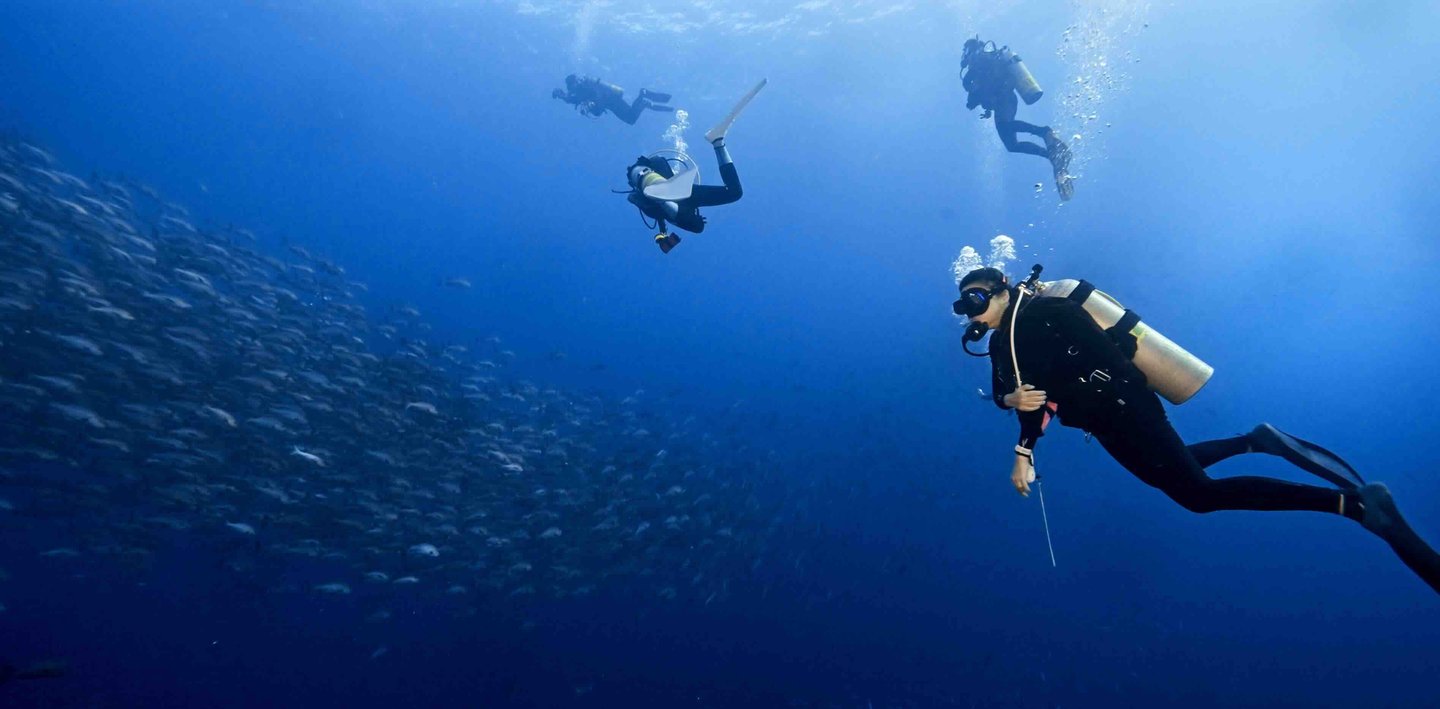
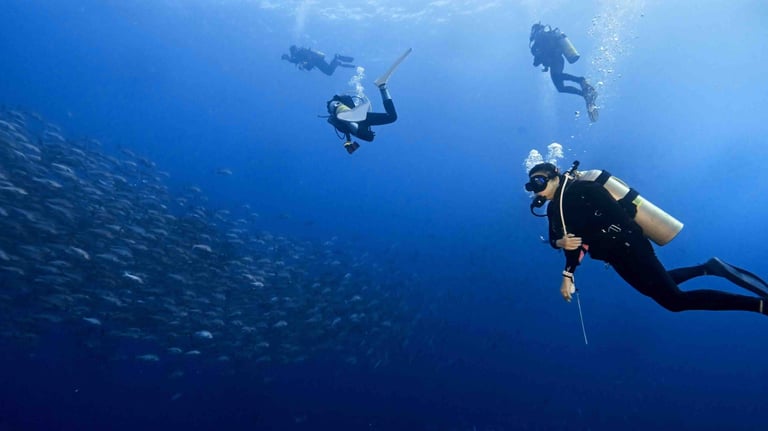
When the school was on the move, they did not seem to mind coming close to the divers.
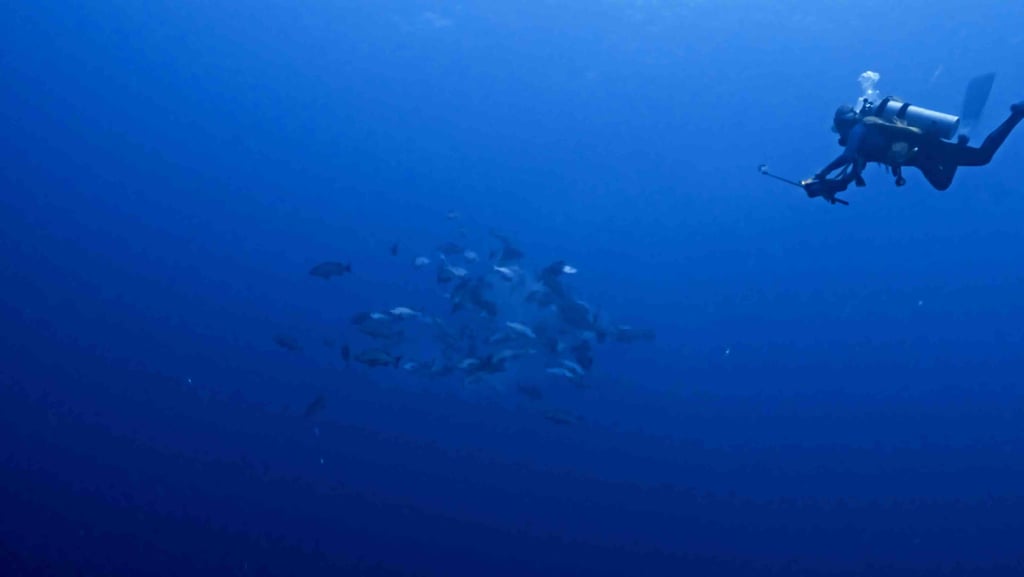
Note how close this diver was to the mating cluster of fish.
the verdict
Would we do this dive again? Maybe not.
We are grateful for the rare privilege of seeing this mass spawning with our own eyes. But we cannot ignore the feeling that our presence, and that of so many others, may have done more harm than good.
Palau’s operators need to reach a consensus on how this dive should be conducted. Perhaps a lottery system, like the one implemented in Cabo Pulmo, Mexico, could limit diver numbers at any given time. Guides also have a responsibility to brief their divers thoroughly and to enforce those rules underwater.
Some spectacles are too important to be treated as mere attractions.